Introduction
“Menopause changes more than just your cycle. It can make hair look tired.”
Menopause is a time when the body changes in many quiet ways. Most women know about hot flashes and sleep issues. What often comes as a surprise is how much hair can change. Hair may feel dry, weak, flat, or slow to grow. Some women also see more hair on their pillow or in the shower drain. These changes can feel scary, but they are not random.
Hair growth is closely linked to hormones. When those hormones shift during menopause, the hair growth cycle also shifts. This does not mean you are losing all your hair. It means the hair is spending less time growing and more time resting. When that happens, hair looks thinner and falls out more easily.
Understanding what is happening helps you care for your hair with more calm and confidence.
Why Does Menopause Change Your Hair?
Hair grows in cycles. Each hair strand goes through a growing phase, a resting phase, and then a shedding phase. In younger years, the growing phase lasts a long time. That is why hair looks thick and full.
During menopause, key hormones like estrogen start to drop. These hormones help keep hair in its growing phase. When they go down, more hairs move into the resting phase. After resting, those hairs fall out. When too many hairs rest at the same time, thinning becomes more visible.
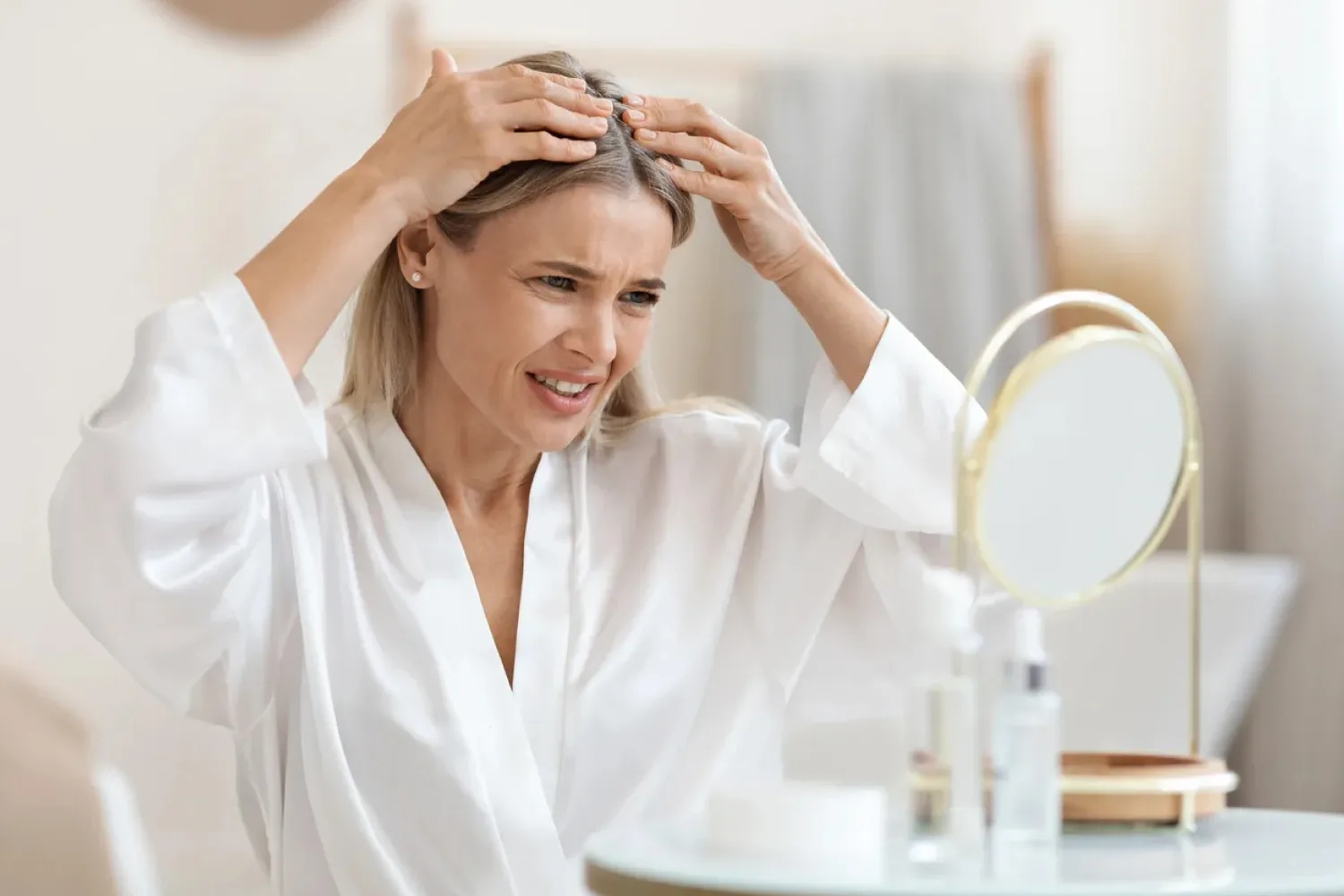
This is why menopause hair thinning usually feels slow and steady, not sudden. You may not see bald spots. Instead, you notice less volume, more shedding, and weaker strands.
What Does Menopause Hair Thinning Look Like?
Every woman experiences it a little differently. Some common signs include:
- Your ponytail feels smaller
- Your scalp shows more in the mirror
- Hair looks flat even after styling
- Hair breaks more easily
- Growth feels slower than before
These changes can be frustrating. Knowing that this is a normal body shift can help you feel less alone.
Why Some Women Notice It More
Not every woman has the same level of hair change. Your daily habits also play a role. Things like stress, sleep, and food choices all affect how hair grows.
Stress pushes more hair into the resting phase. Poor sleep slows down repair. Low intake of protein, vitamins, and minerals means the body has fewer building blocks to work with. During menopause, the body already has less hormone support for hair. When these extra pressures add up, hair thinning can feel stronger.
How Food and Nutrients Support Hair
Hair is made of protein and needs vitamins and minerals to grow. Iron, biotin, zinc, and vitamin D all help support the hair cycle. Healthy fats also help keep hair soft and shiny.
During menopause, digestion and nutrient use can change. Even if you eat well, your body may not absorb everything as easily. That means hair may not get the steady supply of nutrients it needs to stay strong.
This is why many women look to both food and supplements to support hair health during menopause.
Simple Habits That Help Hair Look Better
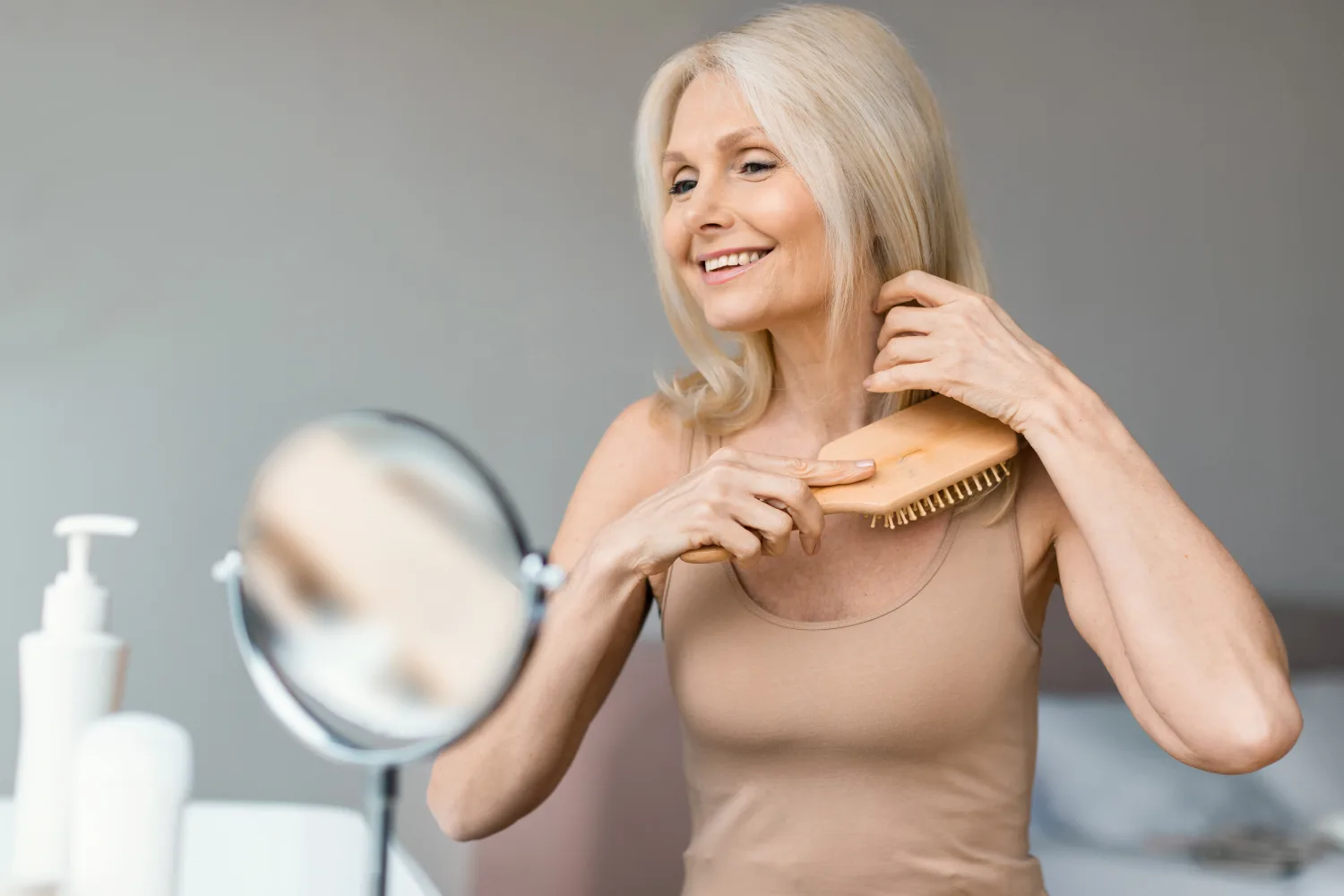
Small daily steps can make a big difference over time. Gentle care keeps hair from breaking and falling out too soon.
Use a soft brush and avoid pulling hair tight. Wash your scalp well so hair roots stay clean. Drink enough water to keep hair from feeling dry. Maintain healthy glucose levels.
These habits do not change hormones, but they help hair make the most of what it has.
How Hormone Changes Affect Hair Roots
Hair grows from tiny pockets in the scalp called follicles. These follicles are sensitive to hormones. When estrogen levels drop, follicles shrink slightly. That means each new hair grows thinner than before.
Over time, thinner hairs make the whole head look less full. This does not mean follicles are dead. They are just working under new conditions. With the right support, they can still grow healthy hair.
Can Supplements Support Menopause Hair Changes?
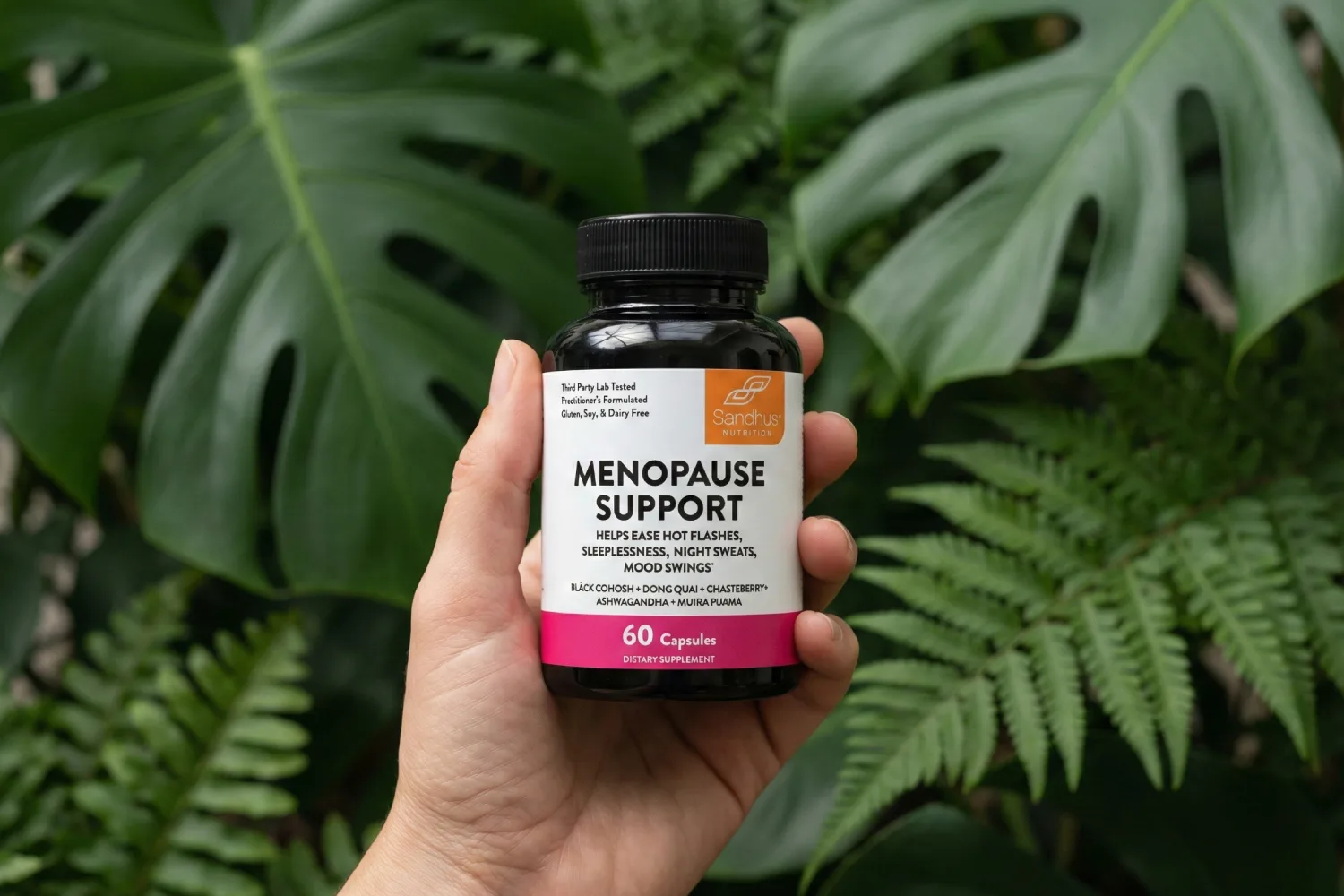
What they do is provide nutrients that support the normal hair growth cycle.
When your body has enough key vitamins and minerals, hair has a better chance to grow strong. Supplements can help fill in gaps when diet alone is not enough.
Many women choose formulas made for menopause that include biotin, vitamin D, zinc, and plant extracts. These ingredients are known to support hair, skin hydration, and nail health as part of daily wellness. Menopause support supplements doesn’t stop there, the also supports healthy hormonal balance essential for overall wellness.
Always read labels and follow serving size directions. If you take medicine or have a health condition, speak with a healthcare provider before starting a new supplement.
Final Takeaway
Menopause can make hair look thinner, but it does not mean your hair is gone forever. The change comes from shifting hormones that affect how long hair grows and how thick each strand becomes.
By understanding what is happening, eating well, using gentle hair care, and supporting your body with the right nutrients, you can help your hair look its best through this stage of life.
Your hair story is still being written. Menopause is just one chapter.